
An Exceptionally Rare Yuan Dynasty Octagonal Faceted Meiping Vase
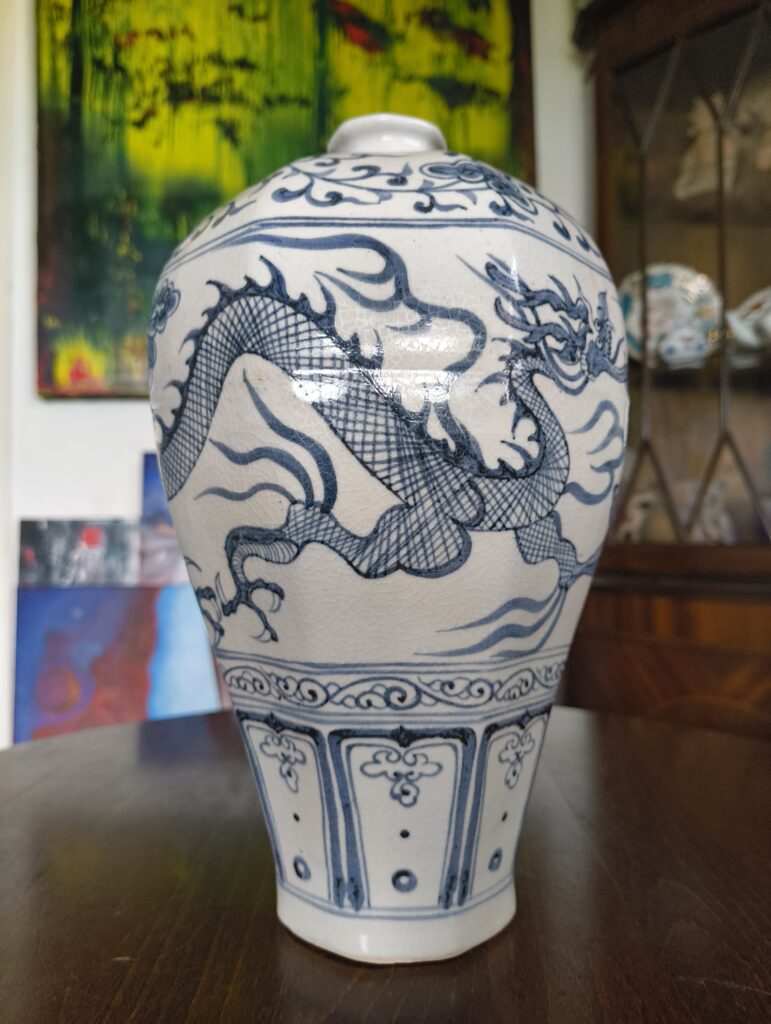
Jingdezhen, China
Circa 1300–1368 (Late Yuan to Early Ming Transitional Period, c. 1430 margin)
Materials: High-fired Kaolin porcelain, hand-painted underglaze cobalt (imported Persian Sumali), clear glaze.
Dimensions: Height: 29 cm
Weight: 1,668 grams
Provenance & Acquisition History
This magnificent octagonal Meiping vase enters the museum-grade inventory of Artistic Avenue Gallery with documented and prestigious lineage. It originates from an important, long-established private Gentleman’s Collection in London, renowned for its discerning focus on early Chinese ceramics.
The vase represents one of over twenty exceptional vessels recently acquired directly from this single, esteemed London collection. Furthermore, Artistic Avenue Gallery is currently in advanced negotiations to acquire an additional forty historic vases from the same provenance. This ongoing acquisition initiative underscores our commitment to assembling a premier repository of early Chinese porcelain. Patrons, scholars, and collectors are invited to follow our forthcoming curatorial releases as this extraordinary private collection is gradually made available to the public.
Curatorial Description
Artistic Avenue Art Gallery & Museum is distinguished to present this masterpiece of 14th-century Chinese ceramic engineering and artistry. Originally attributed to a later period, comprehensive technological and macro-analytical research has redated this vessel conclusively to the Yuan Dynasty (c. 1300–1368), with an expert margin extending into the complex Early Ming Transitional phase (c. 1430).
This reattribution elevates the object from a fine antique to an artefact of paramount historical and cultural importance. Vases of this faceted octagonal form and early date, rendered with imported cobalt and possessing precise physical markers, are remarkably scarce. Comparable institutional examples reside primarily within premier collections such as the British Museum (London), the Palace Museum (Beijing), and the Metropolitan Museum of Art (New York).
Technical Analysis and Material Diagnostics
The fundamental reclassification of this vessel is based on rigorous empirical evidence, including weight-to-mass ratios and microscopic pigment examination.
1. Material and Structural Engineering
The vessel’s substantial weight—a precise 1,668 grams at a height of 29 cm—is a direct reflection of Jingdezhen ceramic physics during the 14th century. To construct an octagonal faceted Meiping without warping, sagging, or collapsing under extreme thermal stress within a wood-fired dragon kiln, master potters were required to throw exceptionally thick, structural walls of kaolin clay. Modern reproductions invariably possess thinner, lighter bodies; this heavy construction is a vital archaic hallmark.
2. Pigment and Micro-Corrosion
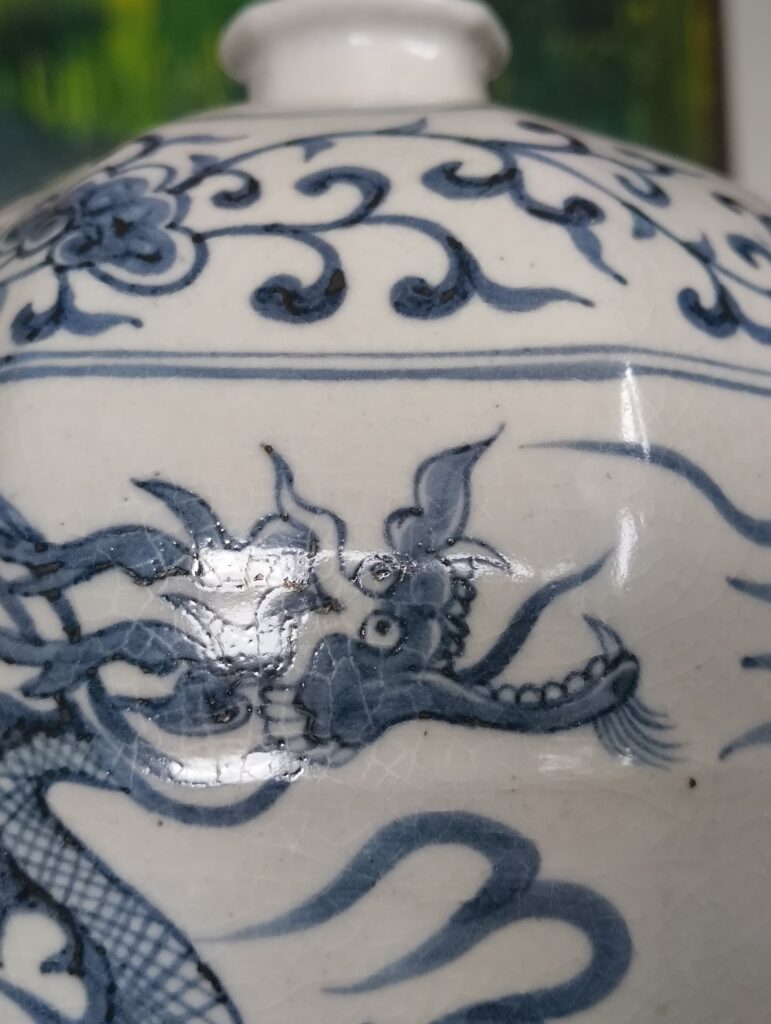
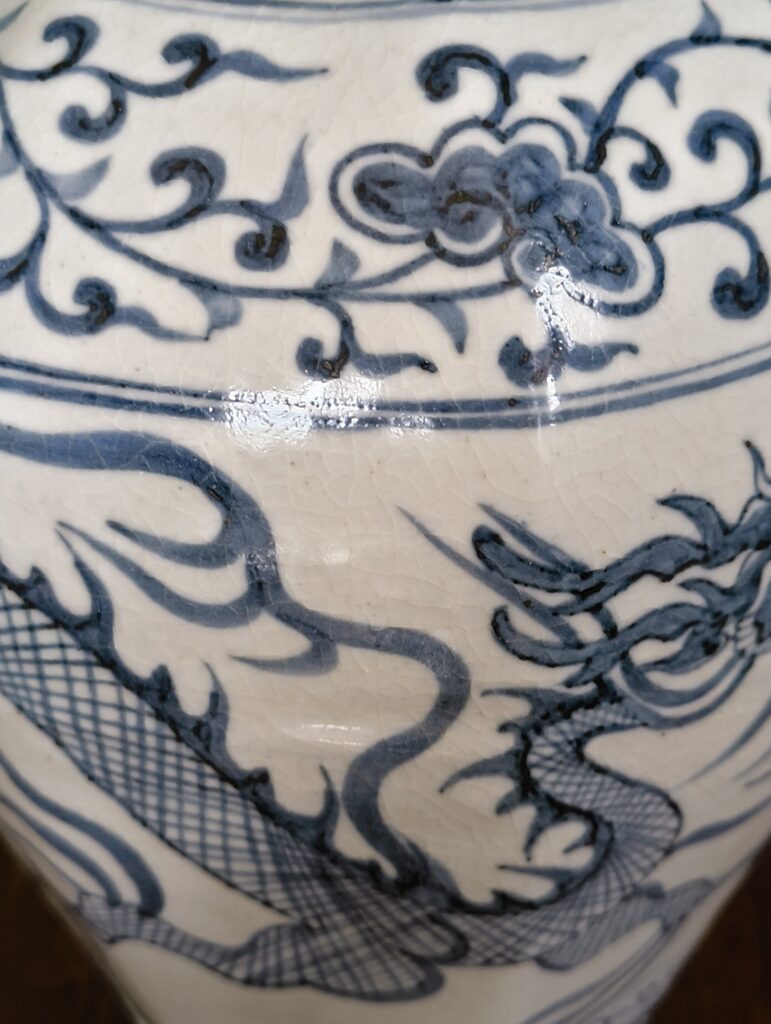
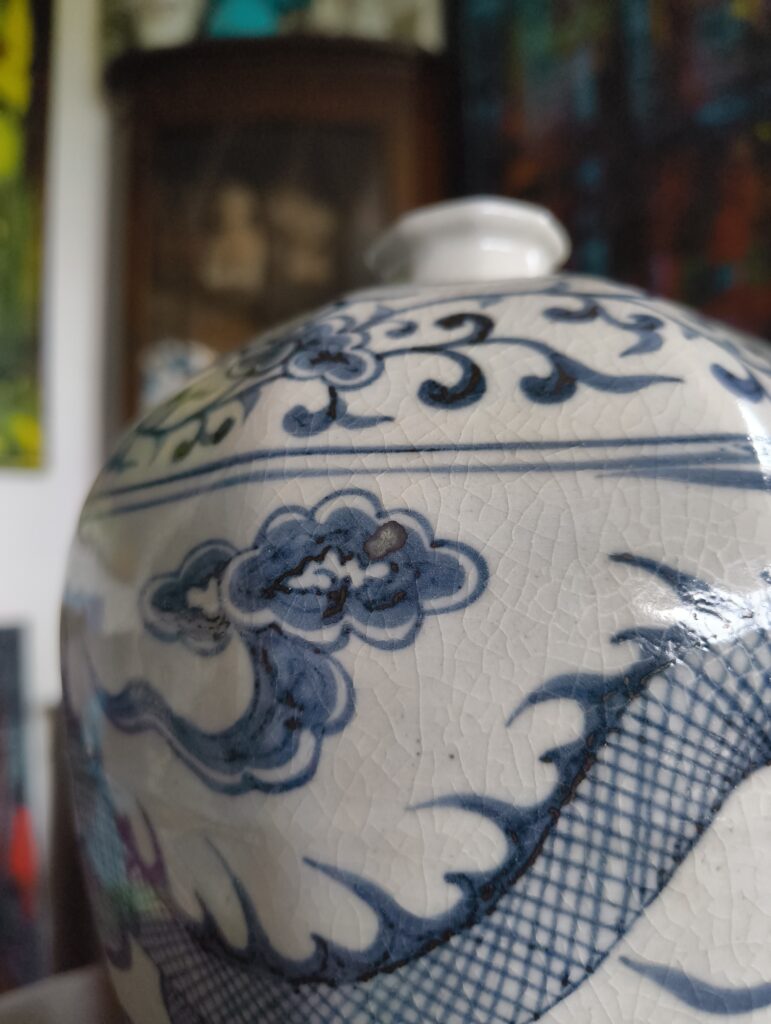
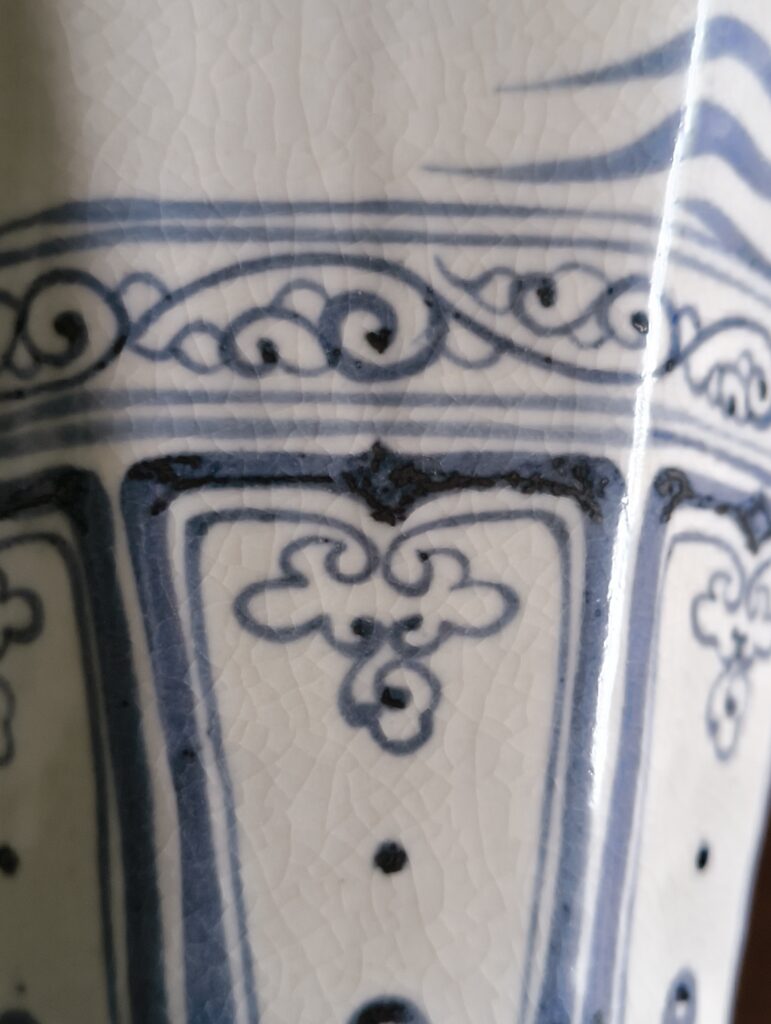
The decoration is executed in highly prized, imported Persian cobalt pigment, historically referred to as Sumali cobalt. Macro-photographic analysis reveals the authentic signature of over six centuries of mineral aging. The iron-rich compounds inherent to this archaic pigment have undergone natural oxidation and chemical corrosion, causing the color to physically sink beneath the glaze matrix. This creates dark, metallic, tactilely recessed pools—a distinct “tattoo effect” impossible to replicate through contemporary artificial aging techniques.
3. Kiln Evidence and Atmospheric Oxidation
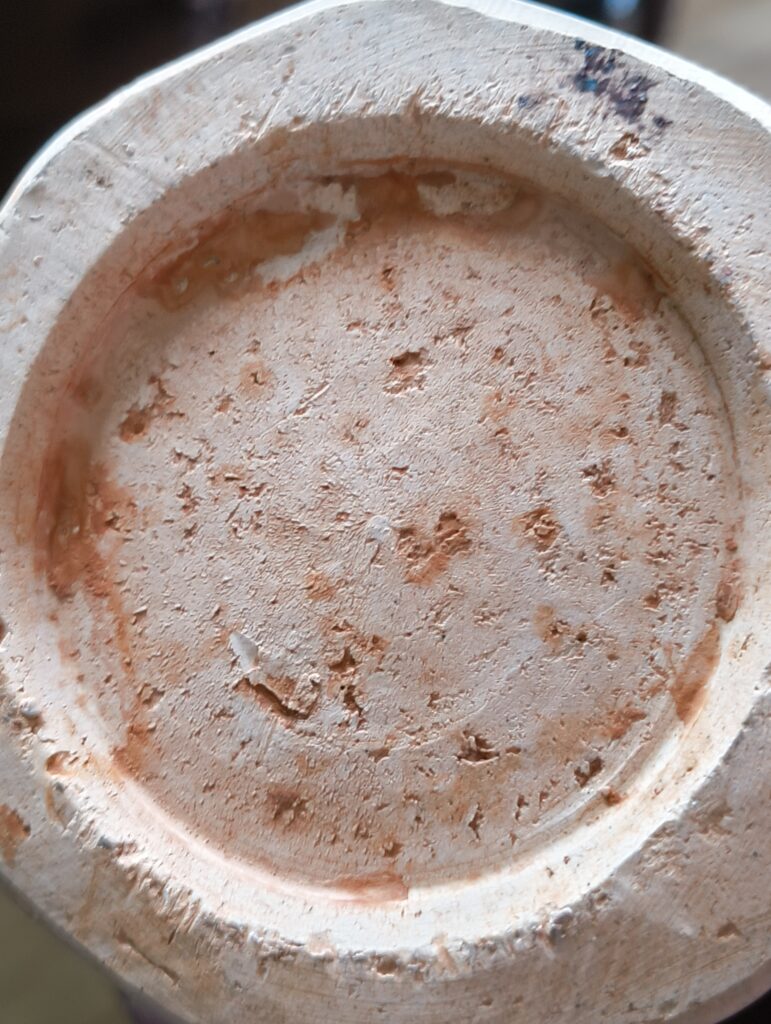
The unglazed, exposed base of the vase provides critical evidence of its firing history. The porcelain body exhibits a rich, characteristic “orange-rust kiln gloss” (kiln skin). This surface layer formed through the atmospheric migration and oxidation of free iron minerals from deep within the clay body during the multi-day cooling cycle of the traditional kiln.
Iconographic and Stylistic Interpretation
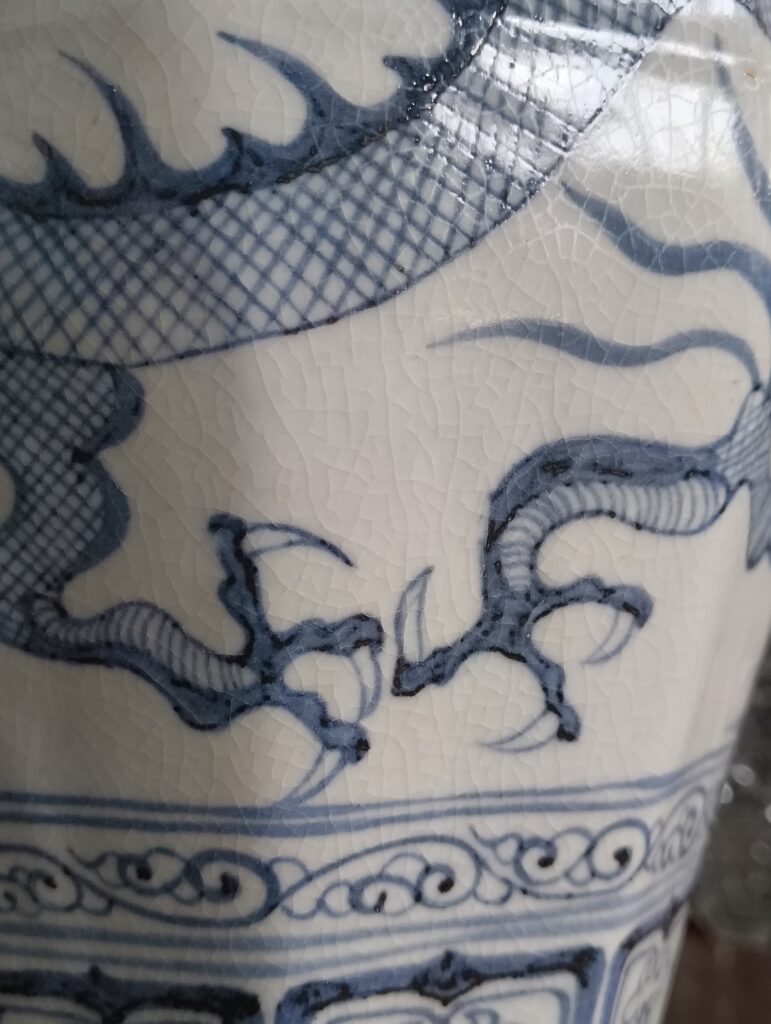
The central frieze features a dynamic, imperial-grade dragon depicted with three-clawed feet, navigating amidst scrolling clouds. Crucially, the dragon’s anatomy—characterized by a slender, elongated neck and specific claw configuration—conforms strictly to High Yuan dynasty iconography, distinguishing it from the broader, heavier dragon depictions of later Ming reigns.
The decorative composition is arranged in clearly defined registers separated by geometric borders, embodying the horror vacui aesthetic typical of the Yuan period. A stylized cloud-collar motif adorns the shoulder, while the lower body is grounded by traditional lotus-petal panels. The entire composition demonstrates a subtle balance between the rigid geometry of the eight facets and the fluid, sinuous energy of the central dragon.
Statement of Cultural Significance
This octagonal Meiping is a critical historical document encapsulating a pivotal era of global trade (the importation of Persian cobalt), technical mastery (the execution of complex, faceted porcelain forms), and imperial iconography. Secured with verified London provenance, its inclusion in our collection offers a rare opportunity to engage directly with the material culture of 14th-century China.
Thank you for taking the time to explore this extraordinary piece of history with us.
We invite you to stay tuned as we continue to unveil more rare treasures from this remarkable collection.
Artistic Avenue Art Gallery & Museum
